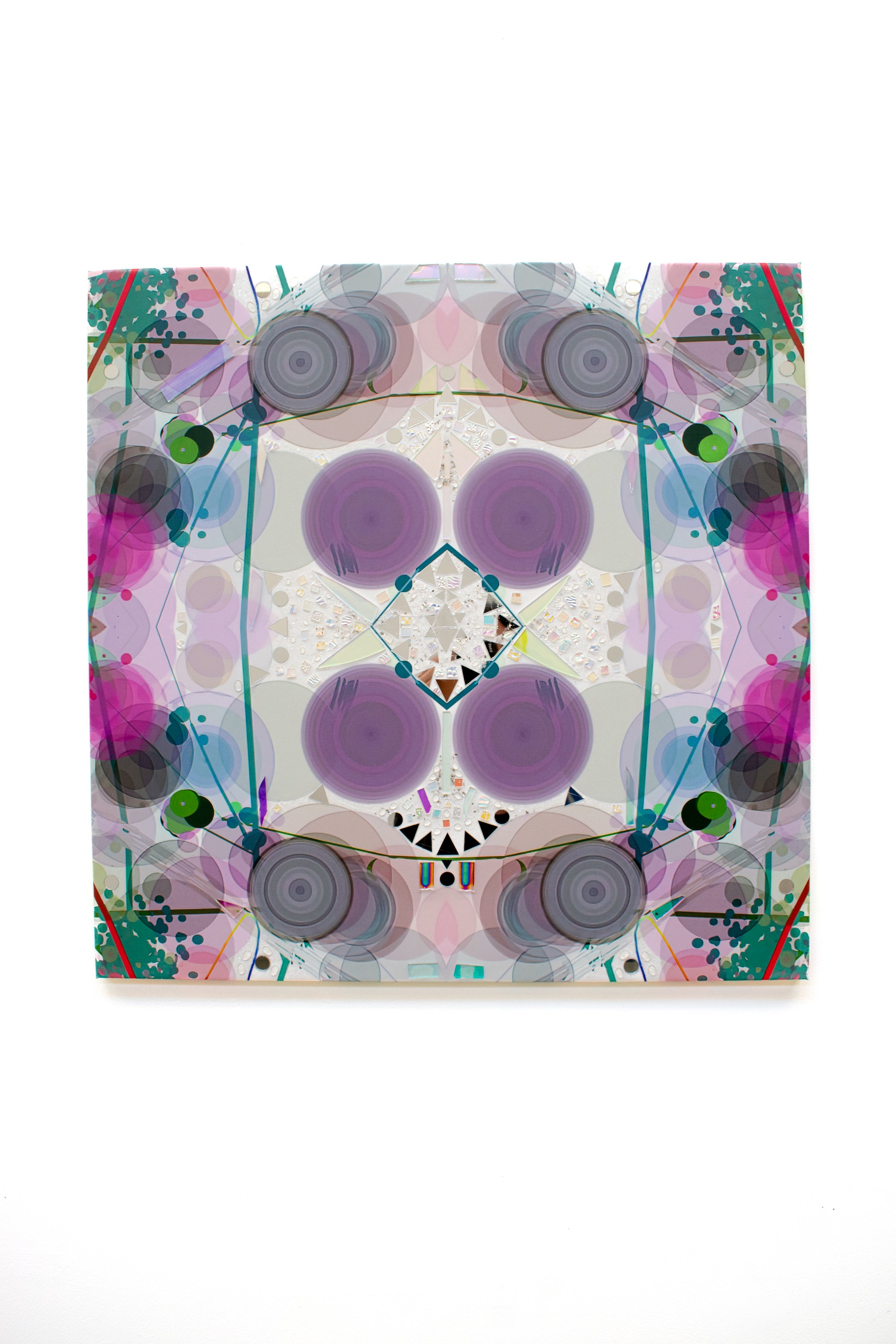
Kaleidoscope Mind Canvas
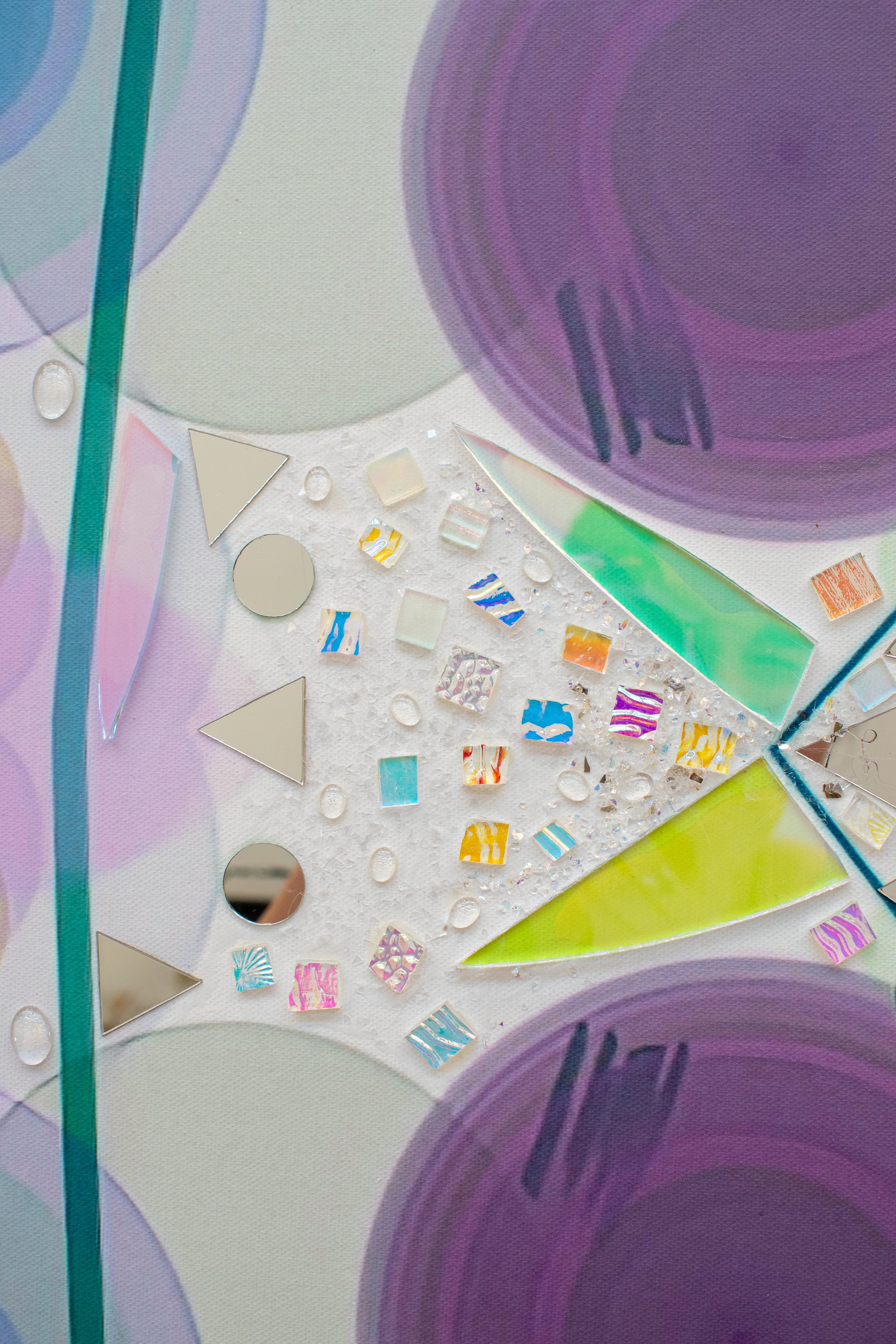
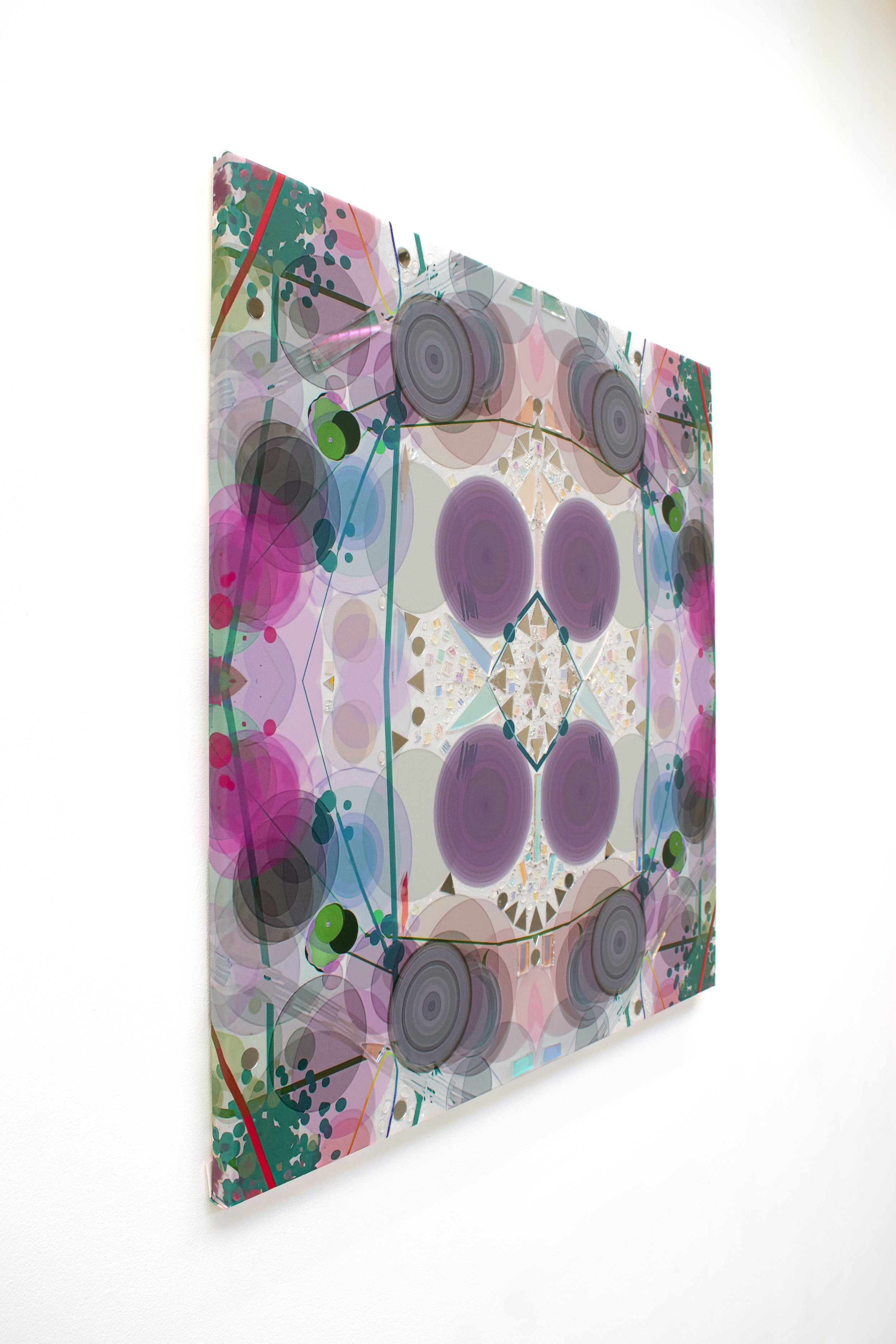
Mixed-media canvas (dichroic glass, mosaic glass, and mirror tiles on canvas print)
38×38 inches
Giant Kaleidoscope
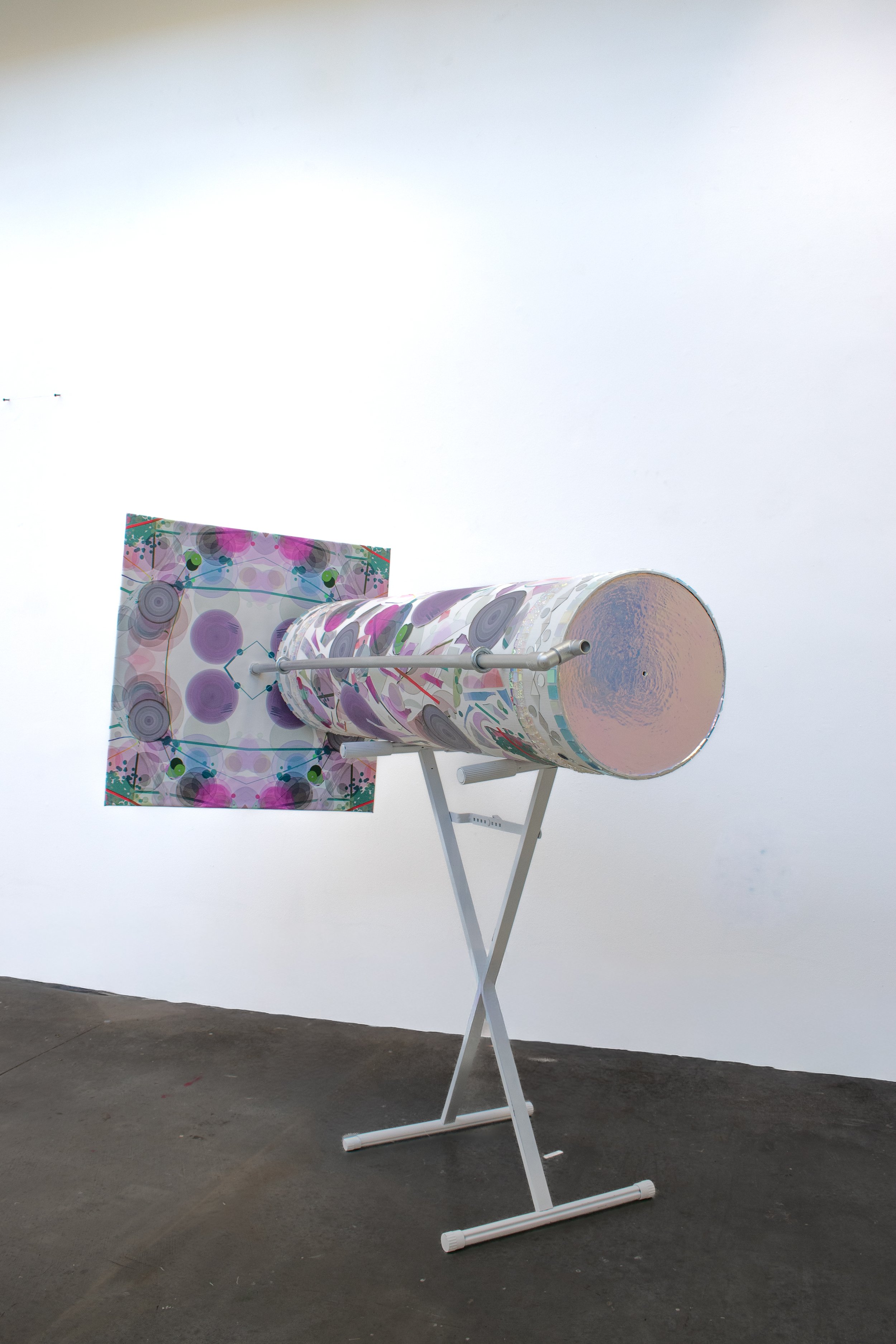
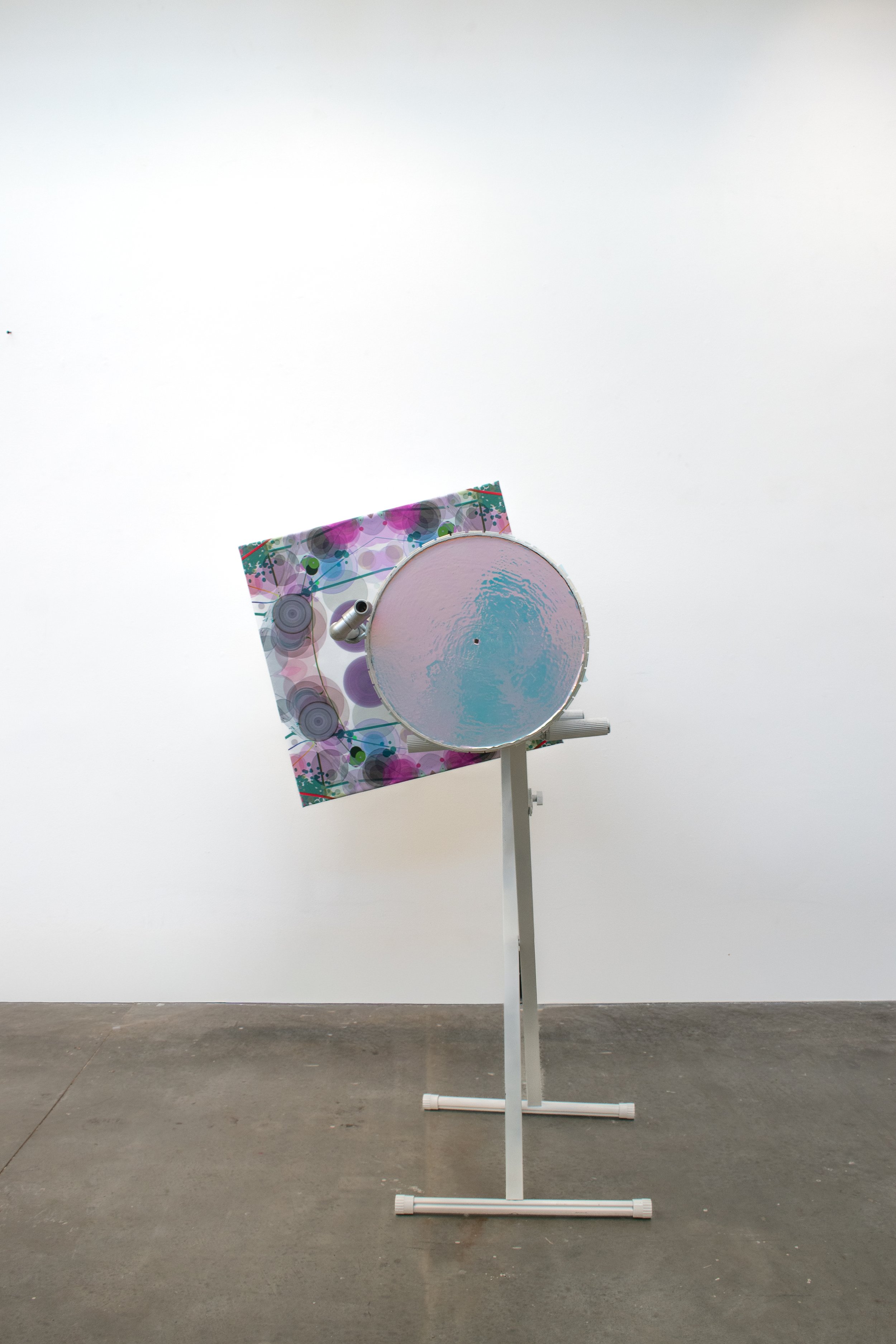
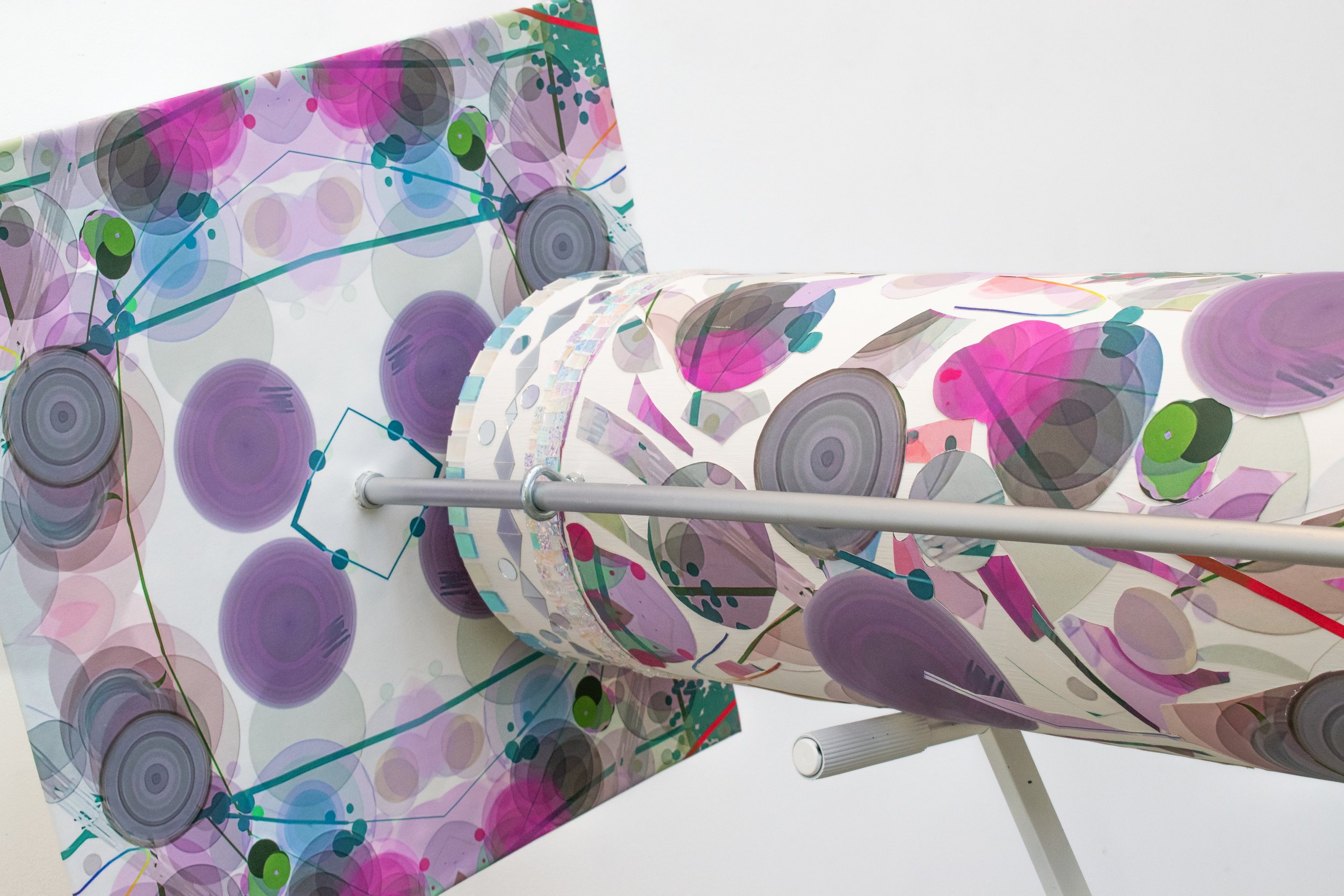
Interactive kaleidoscope (Sakrete concrete form tube, reflective acrylic mirrored sheets, PVC pipes, PVC connection joints, wooden circle piece, stainless steel screw eye hooks, piano stand legs, foam board, Kaleidoscope Mind canvas print, mirror tiles, decorative glass textured pieces)
4 × 4 feet
Heat Wave
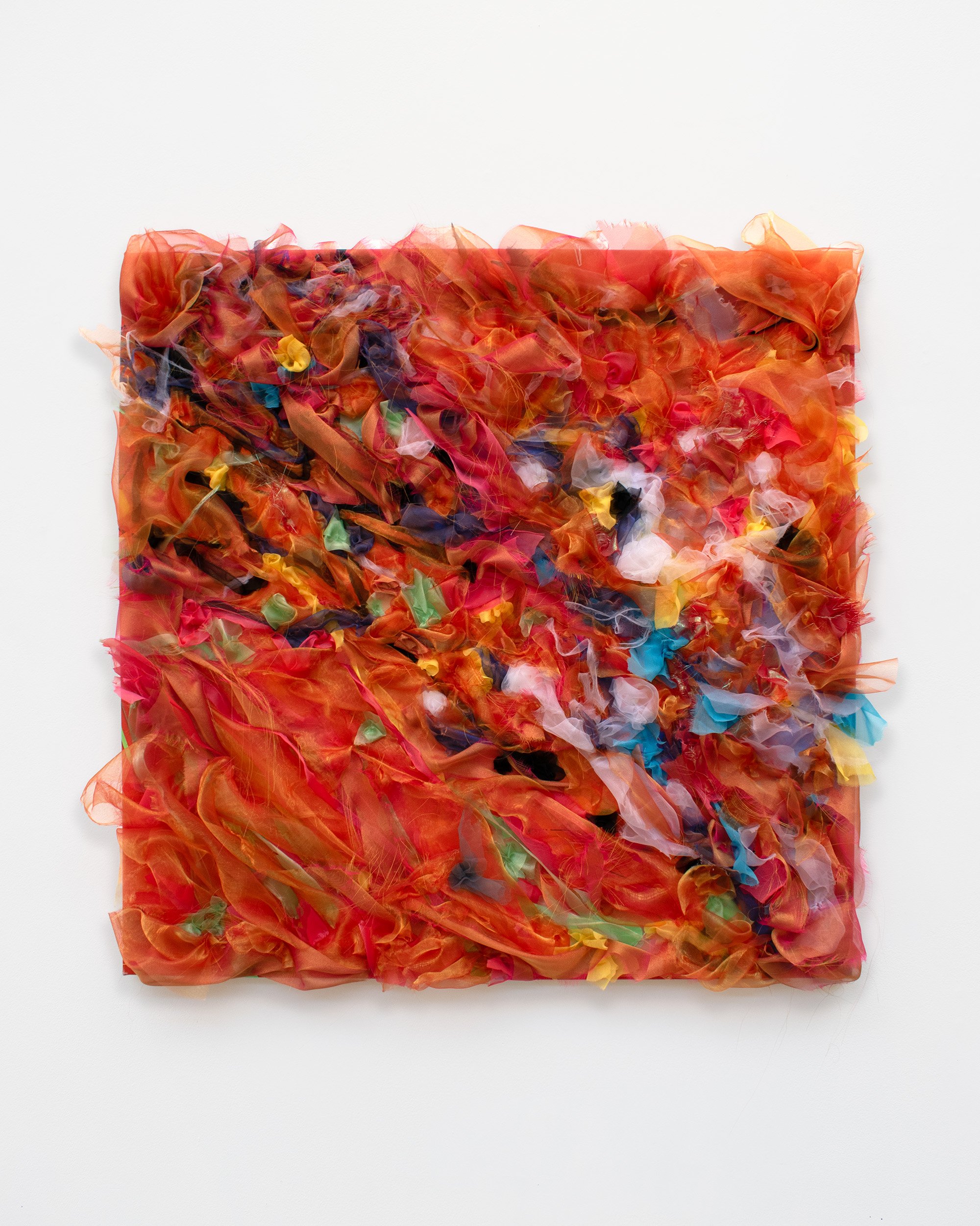
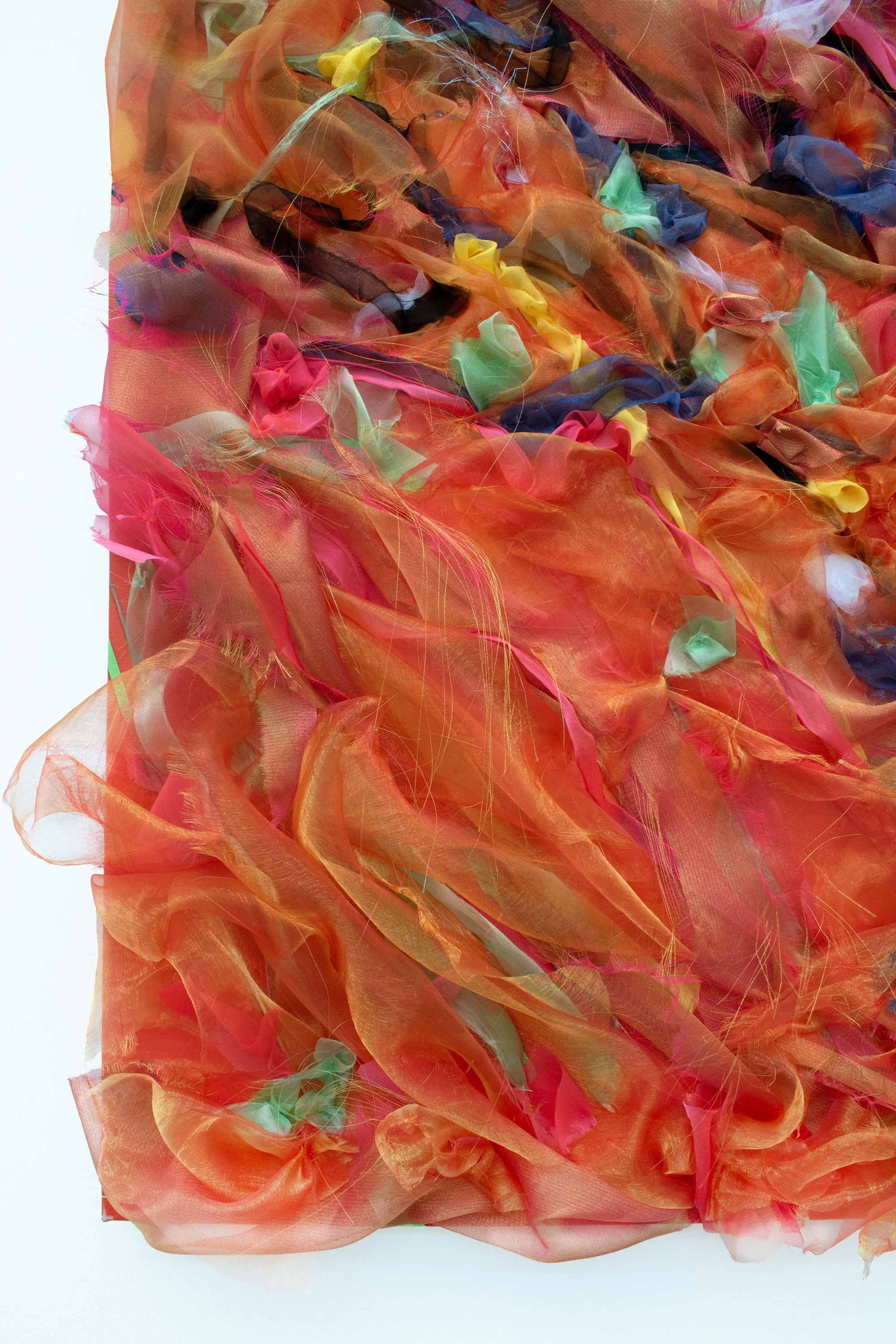
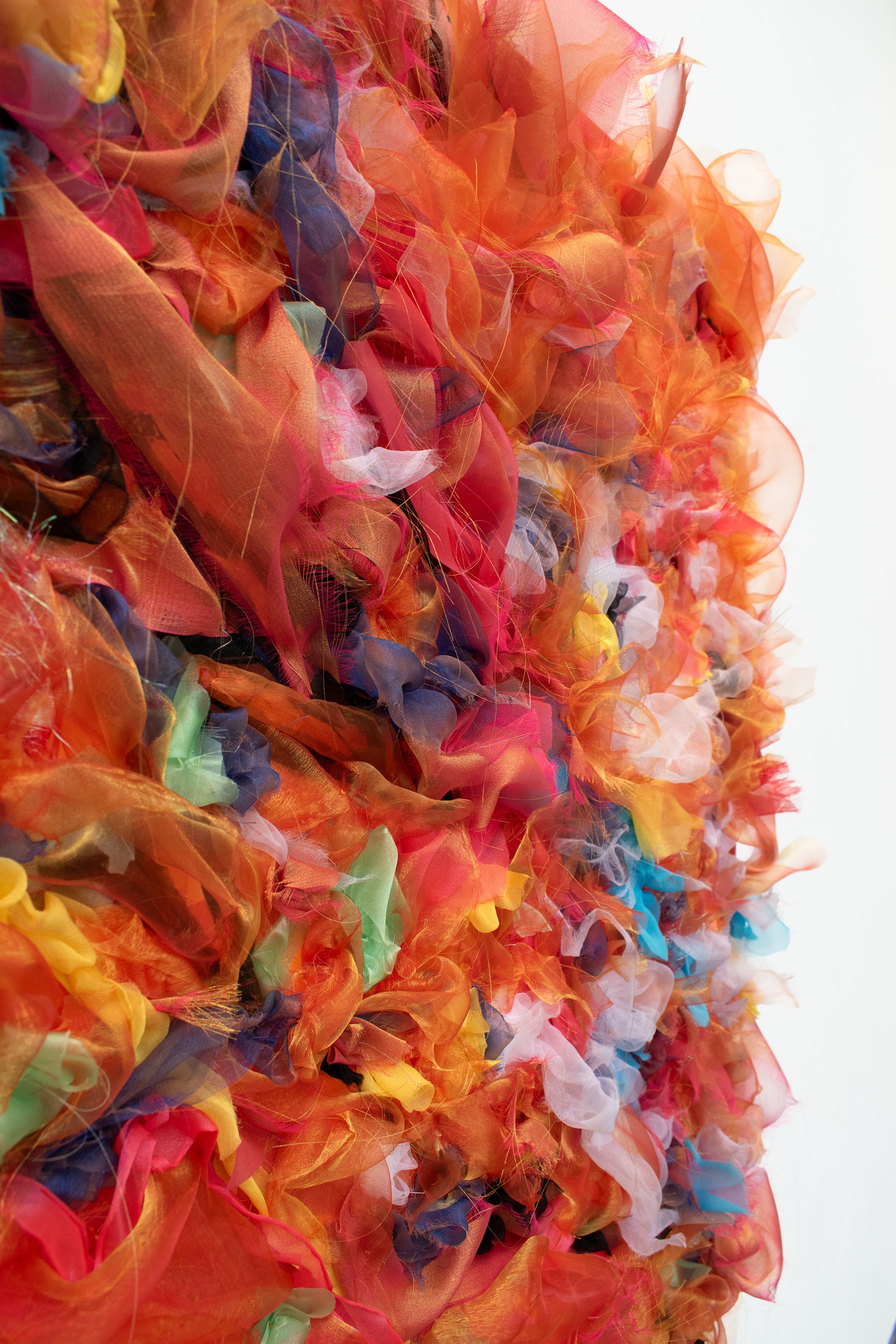
Mixed media canvas (silk, organza, and thread)
38×38 inches
Heat Wave is a mixed-media canvas that reveals the origins of Lilia Munn’s artistic process while transforming her eye-painted imagery into a tactile, dimensional work. The piece begins with a piece she painted with her eyes, transforming their movements into expressive marks and color, and brought into the physical realm through a canvas print.
From this foundation, Lilia directed her translators to build upon the printed image with hand- and machine-sewn silk and organza. Gossamer fabrics billow outward from the canvas, their translucent layers and movement evoking the flickering, untouchable nature of flames. Frayed edges mimic the sparks and crackles of a fire, while the interplay of vibrant color, delicate fabric, and restless texture captures fire’s duality—its mesmerizing beauty and its potential for destruction.
Aftermath
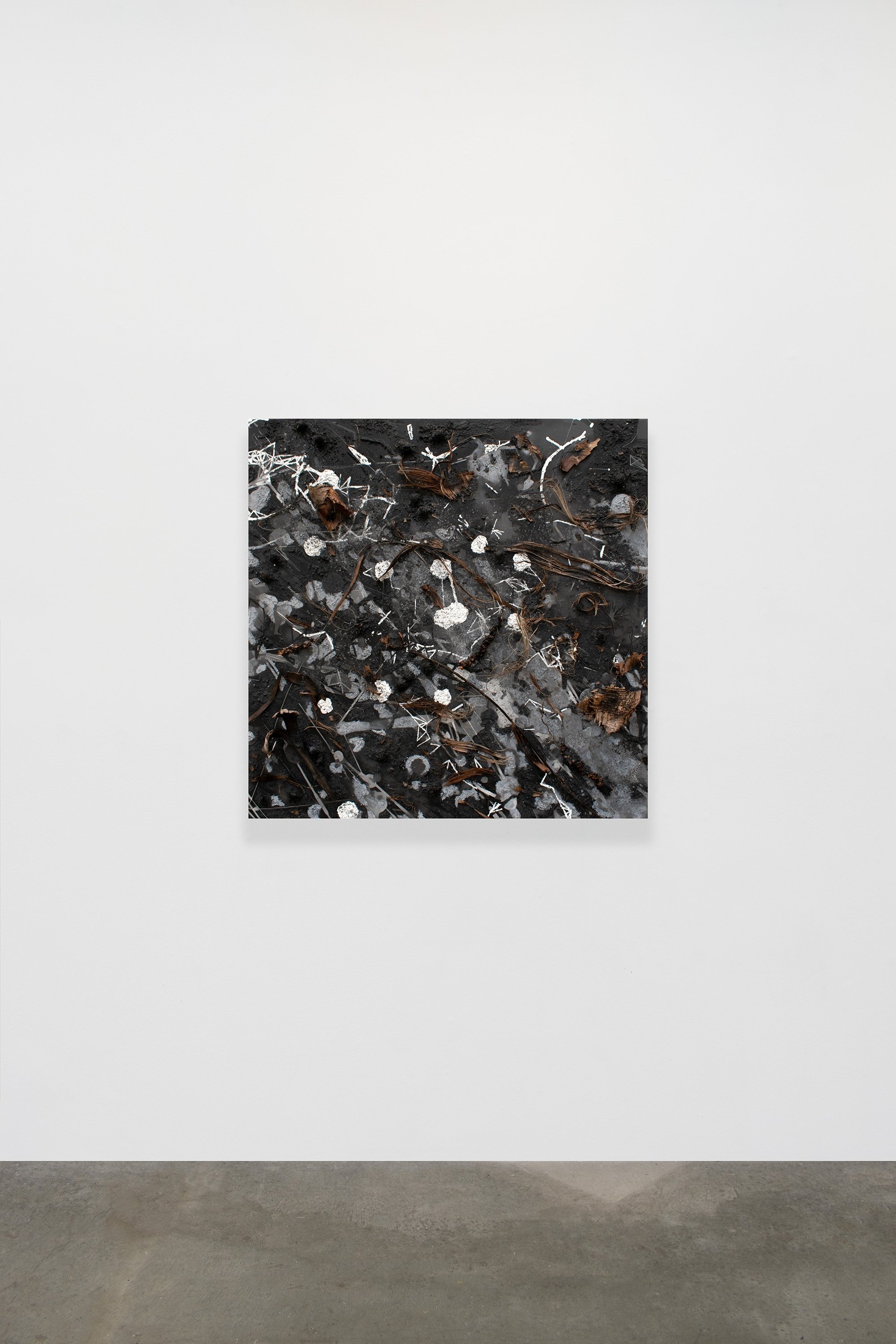
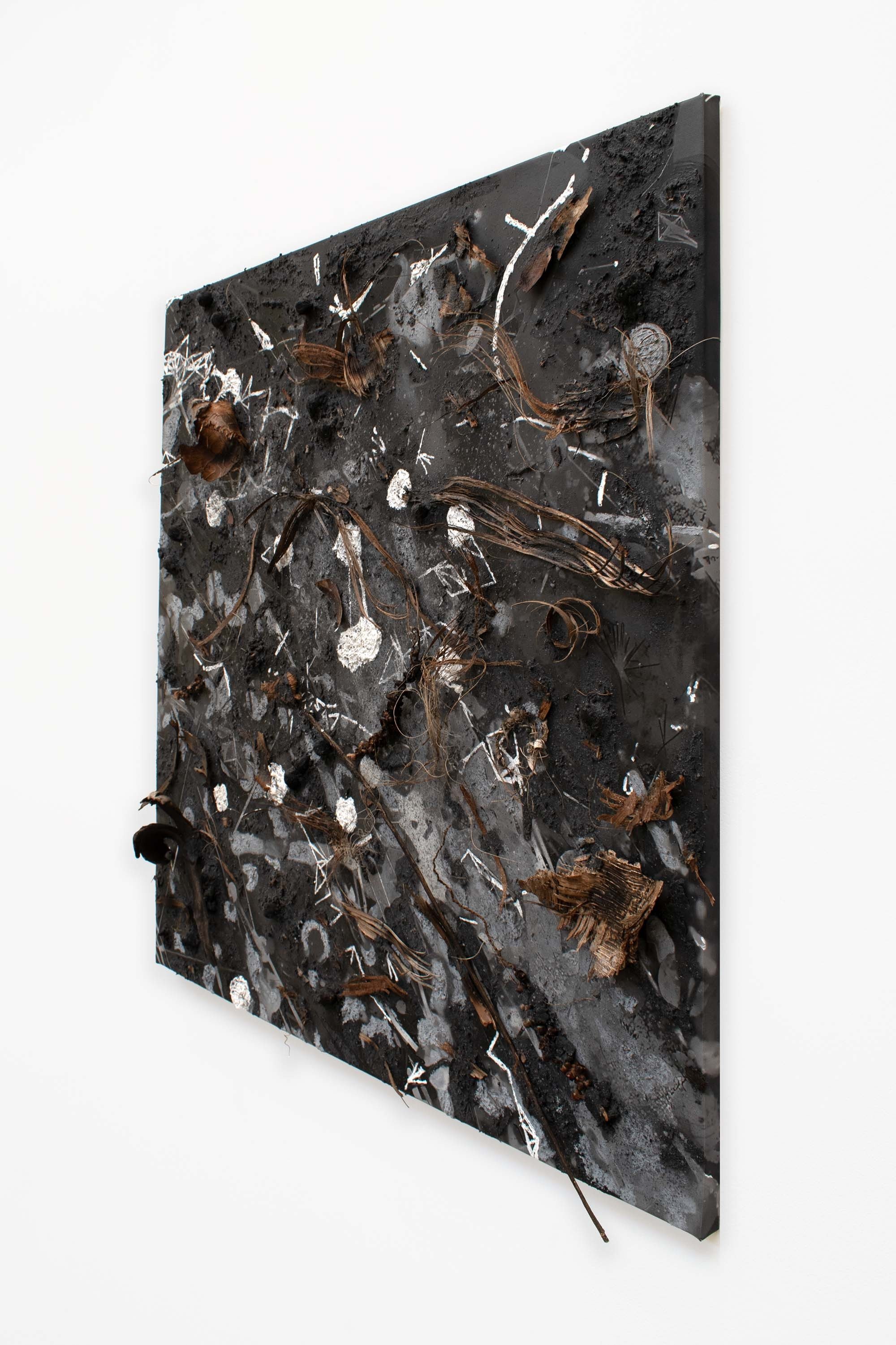
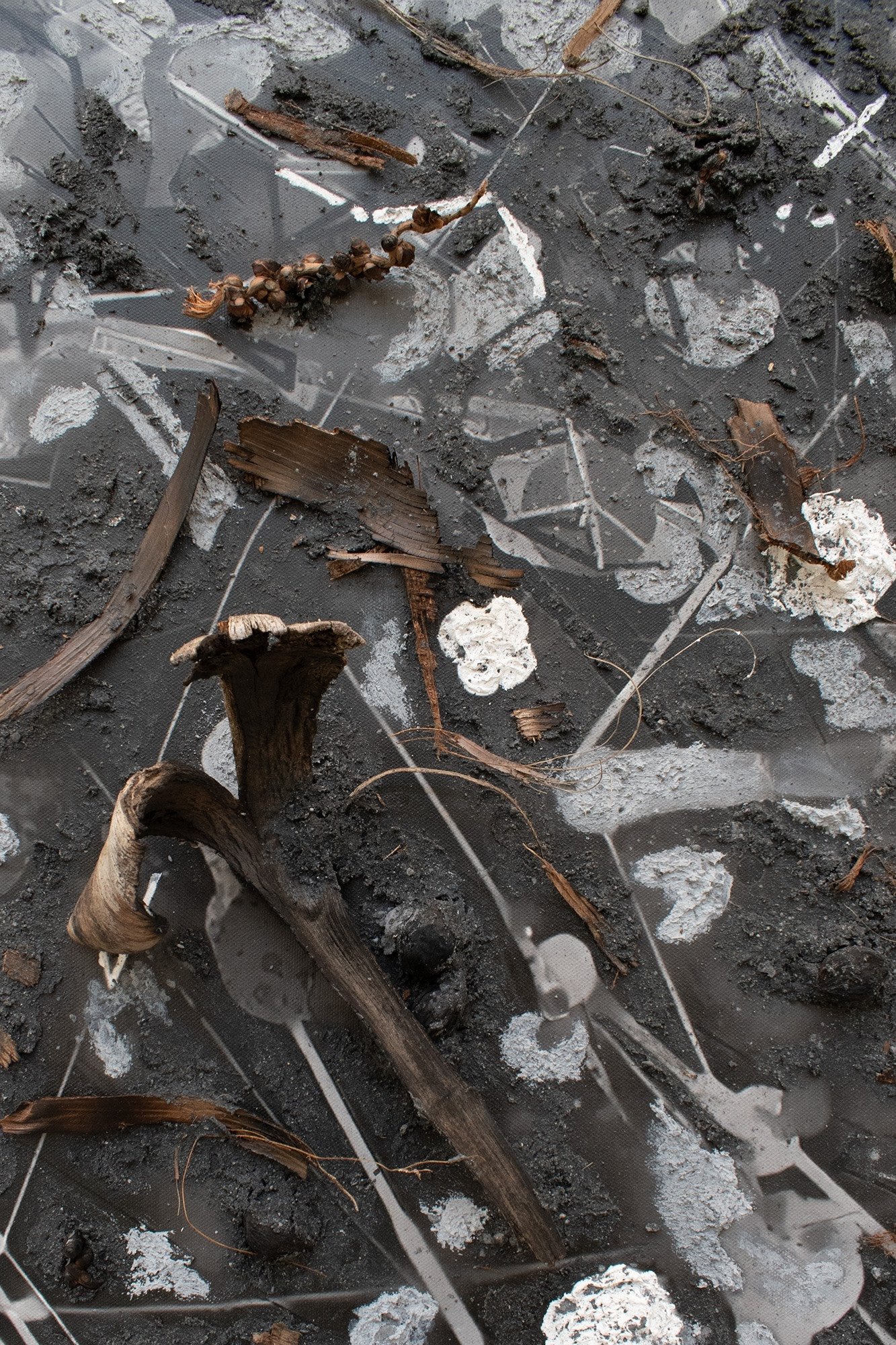
Mixed media canvas (sunflower ash, juniper ash, grass ash, acrylic gel medium, acrylic modeling paste, found organic objects, including palm tree leaves and berries, nuts, tree branches)
38×38 inches
Aftermath presents the stark remains left in the wake of fire, stripped to a palette of blacks, whites, and grays. Created in part through painted sunflower, juniper, and grass ashes, burnt palm leaves, berries, nuts, and branches, these elements become fragmented remnants of a once-living landscape, their charred forms evoking devastation and loss.
The work also considers the environmental conditions that contribute to modern wildfires. Palm trees, an iconic feature of the Southern California landscape despite being non-native and highly flammable, take on particular significance. Sunflower ash introduces a personal dimension, connecting the work to Lilia’s Ukrainian-American heritage and to the sunflower fields devastated by Russia’s ongoing invasion of Ukraine. Together, these transformed materials create a meditation on destruction, absence, and what remains after the fire.
Into the Fire
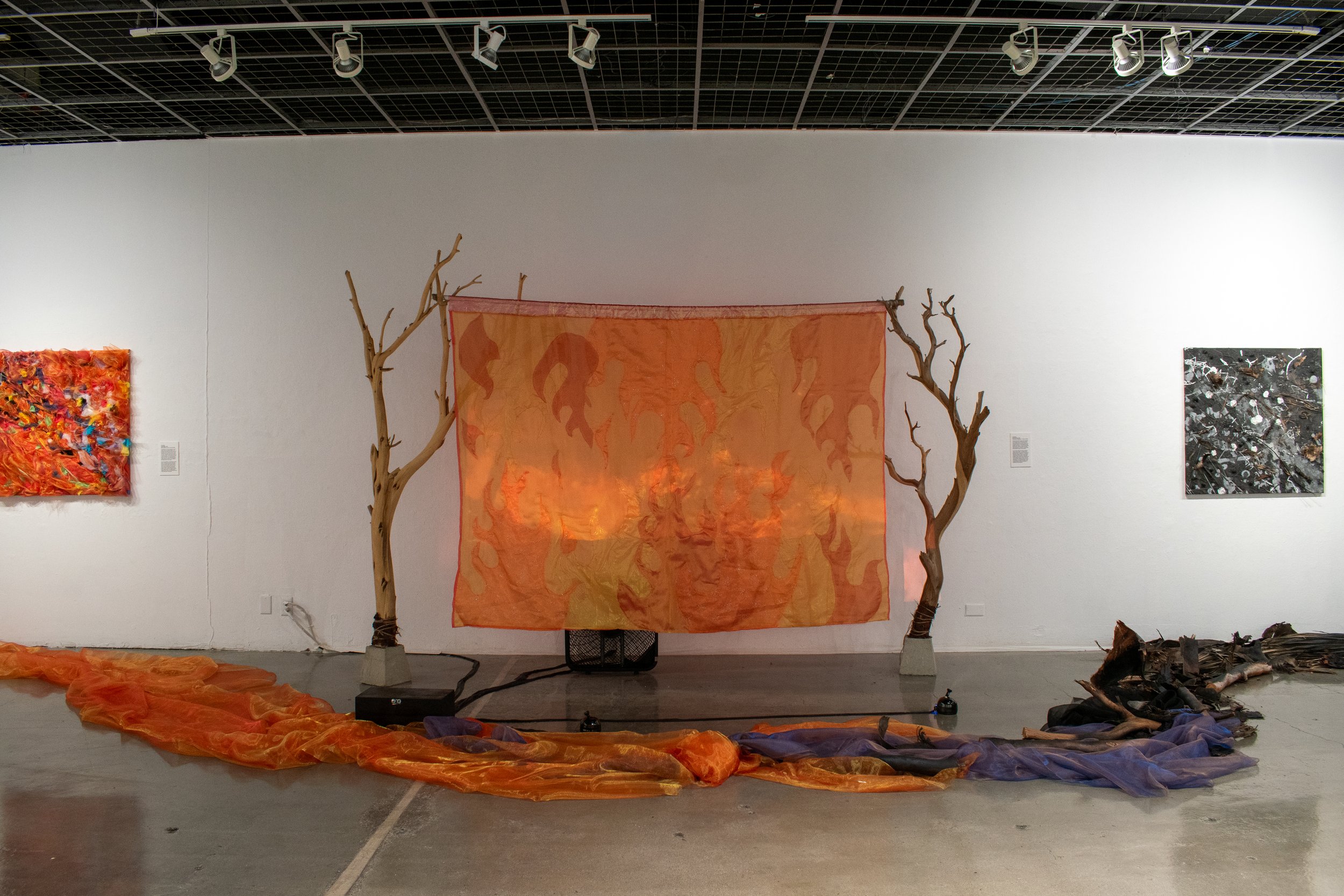
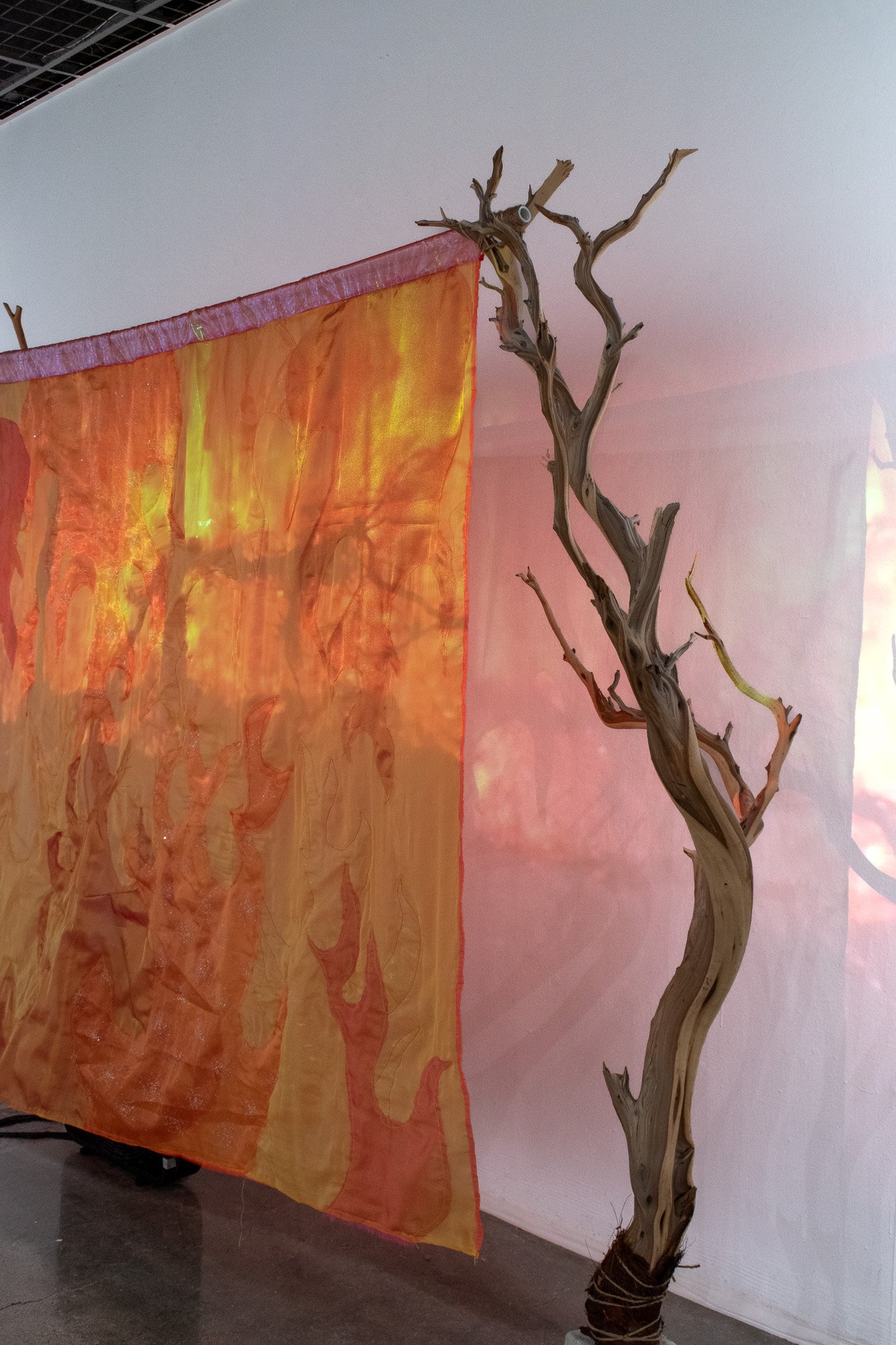
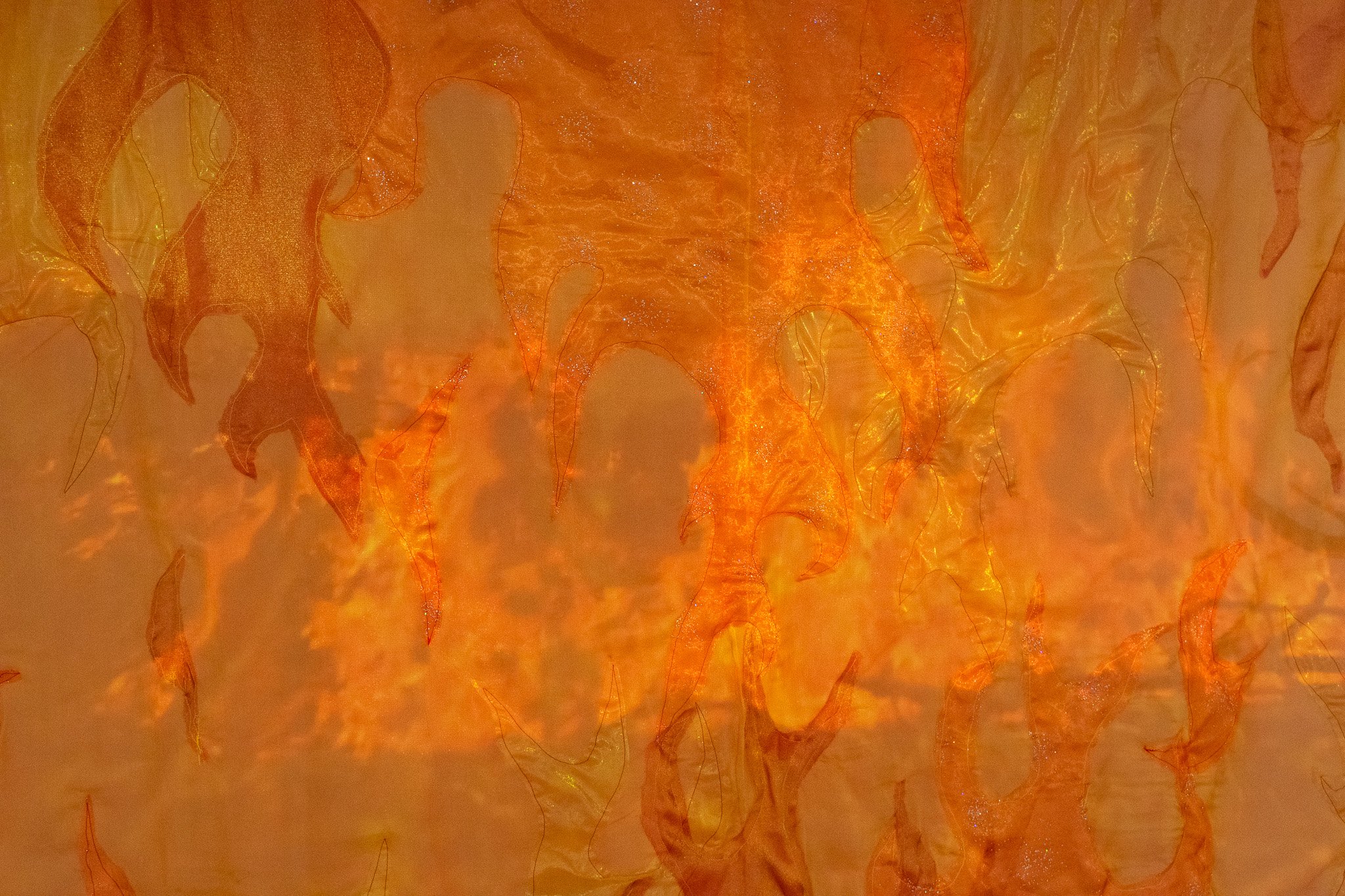
Immersive installation (silk, organza, thread, concrete pier block, palm tree leaves, twine, tree branches, box fan, water diffuser, ceramic pots, 18 gauge wires, Raspberry Pi, GPIO 12 Relays, Dupont wires, projector, ultrasonic sensors, speaker)
Into the Fire transforms the visual language of Heat Wave into a multisensory environment, inviting viewers to move beyond observing the flames and experience them as an immersive presence. The installation brings together silk, organza, concrete, palm leaves, tree branches, ceramic vessels, and other tactile materials to construct an environment that feels both organic and elemental.
As a viewer enters the space, ultrasonic motion sensors trigger a carefully choreographed sequence of sensory elements, programmed using a Raspberry Pi. A projector casts flame imagery across a fabric screen constructed from remnants of Heat Wave, creating a direct material and conceptual connection between the two works. Fans introduce movement, diffused scents evoke the atmosphere of a burning landscape, speakers contribute an auditory dimension, and heating elements bring the sensation of warmth into the experience.
Akron St. Jan 7. 2025
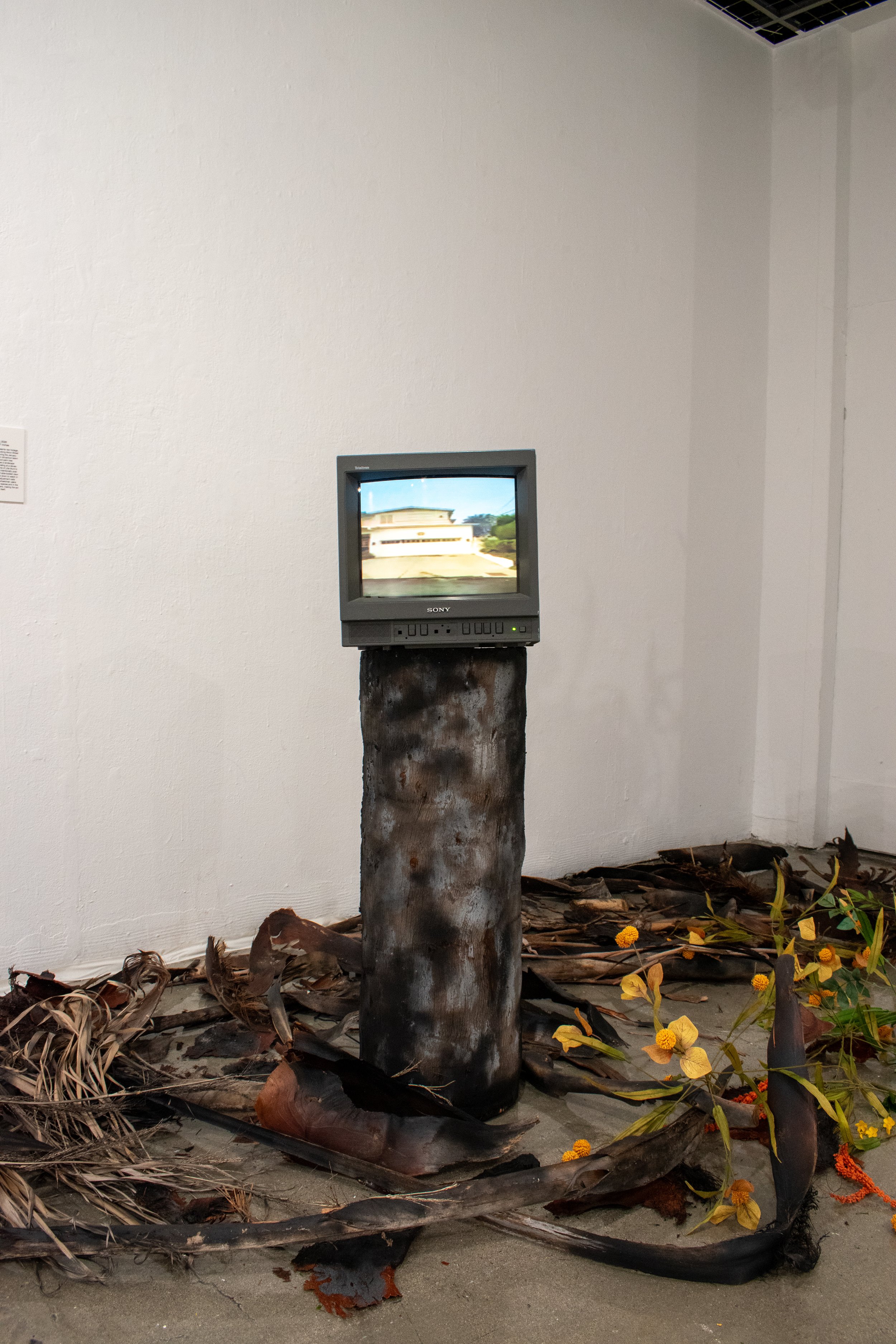
iPhone video (raw video taken on a motorcycle and displayed on an old-school television)
Akron St. Jan. 7, 2025 presents raw footage, recorded on a motorcycle along Akron Street in the Pacific Palisades during the January 2025 wildfire. Shown on an old-school television resting atop a three-foot palm tree stump, the footage captures a landscape transformed by fire, culminating at a devastated home belonging to one of Lilia Munn’s relatives. The television is intentionally positioned below the eyeline of able-bodied viewers, requiring them to bend down to watch in discomfort. This physical adjustment calls attention to the obstacles wheelchair users often encounter in both art spaces and in the aftermath of natural disasters, making the act of viewing part of the work itself.
Rejuvenation
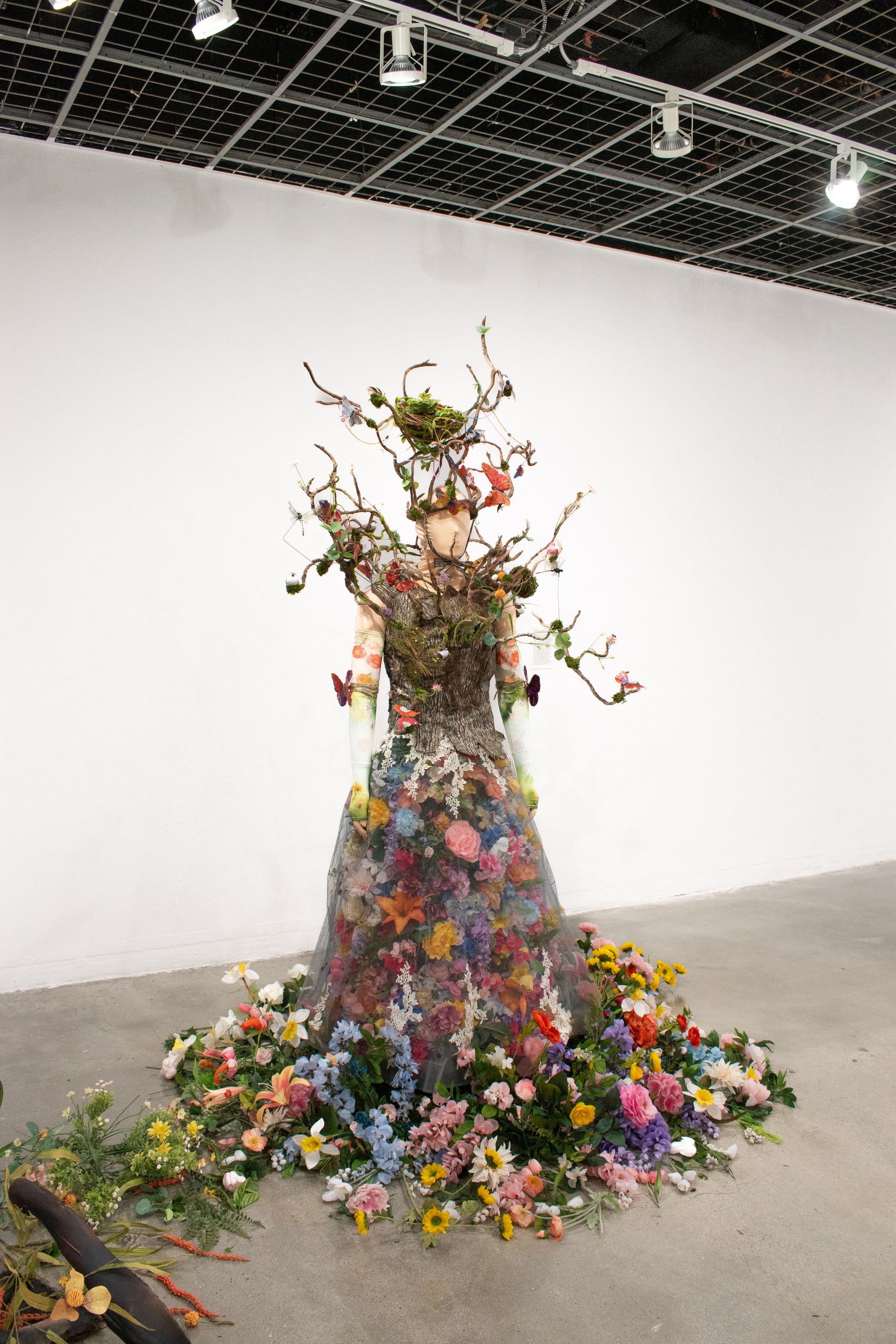
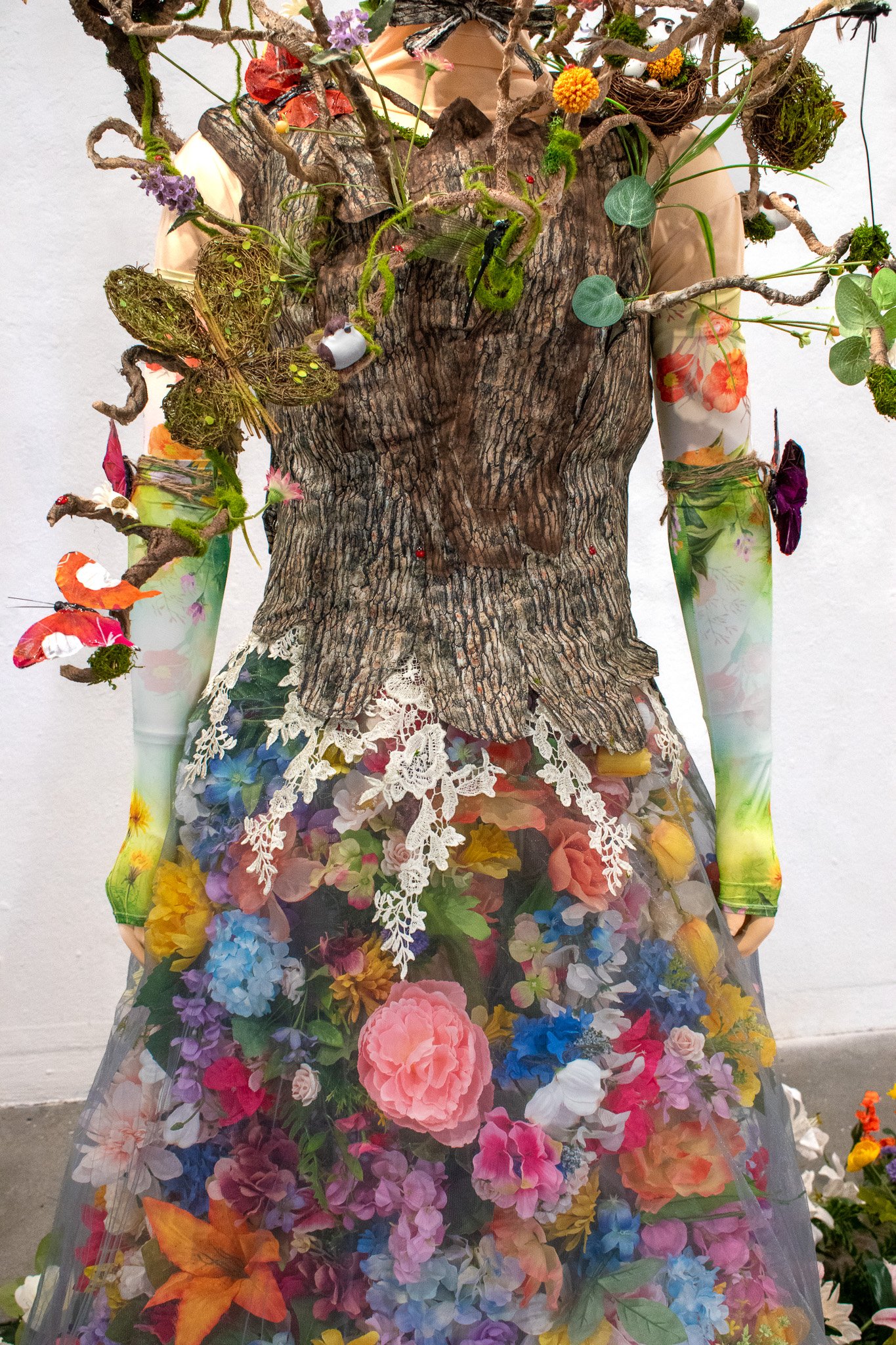
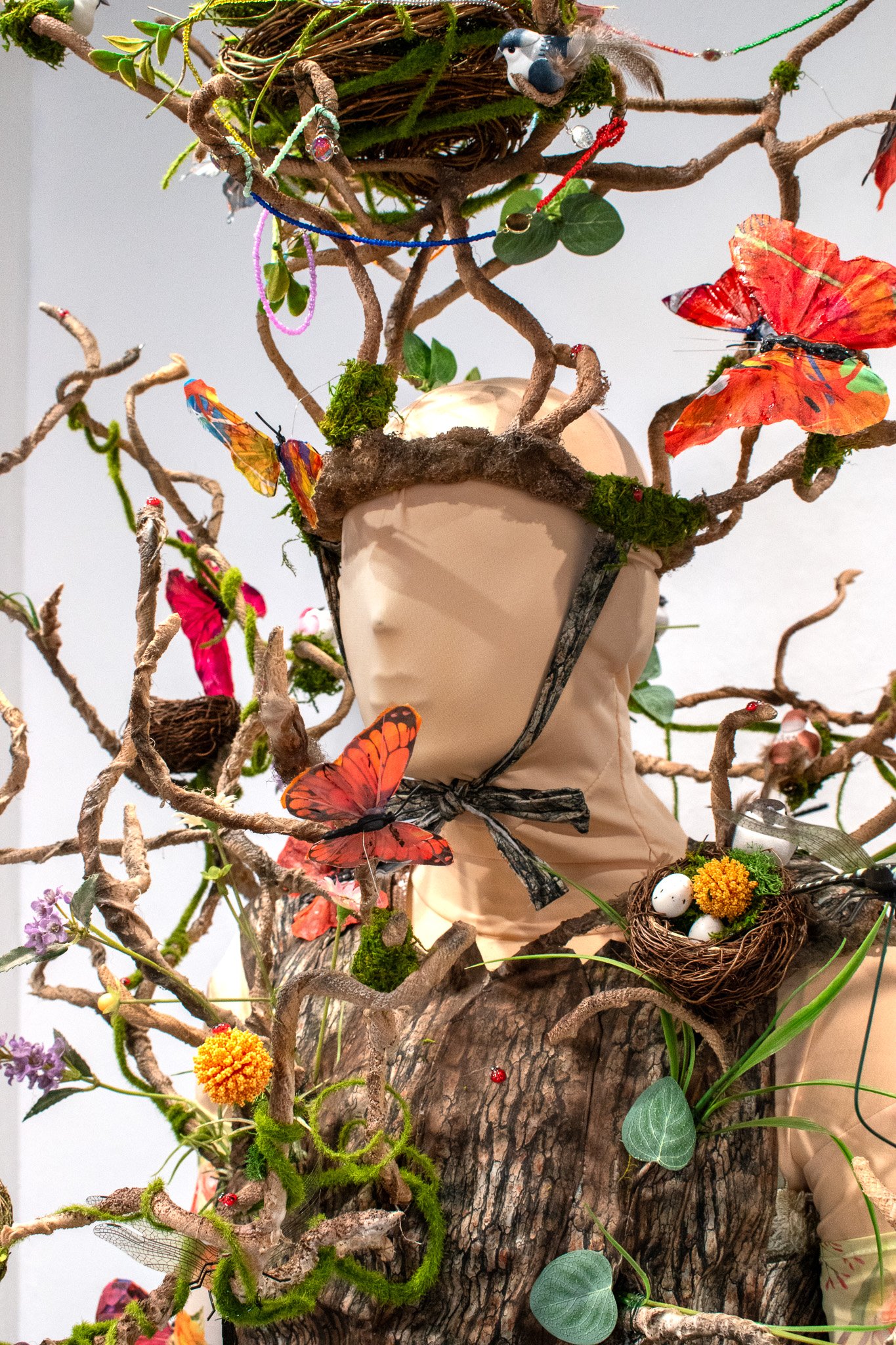
Wearable sculpture (upcycled tulle, upcycled and new silk flowers, morph suit, faux bark fabric, football protective shoulder pads, butterflies made from heatwave art on silk, upcycled bird nests, eggs, birds, various insects, Lilia’s silk arm covers, seed beads on wire, steel bezels with Lilia’s art, thread, wire, ace bandage, liquid latex, airbrushed paint, silver snaps)
7×4 feet
Rejuvenation is a wearable sculpture that represents rebirth: the transformation of what has been broken, discarded, or weathered into something new. Constructed from upcycled tulle, silk flowers, faux bark, protective shoulder pads, and found natural elements, the piece merges organic forms with fashion and sculpture.
Personal elements of Lilia Munn’s daily life are woven throughout the work. Her arm covers, worn over her arm braces for brachial support, become part of the sculpture, while butterfly wings are crafted from silk bearing imagery from Heat Wave. Seed beads strung on wire and adorned with steel charms feature moments of Lilia’s eye-painted artwork, bringing the origins of her artistic process full circle. Upcycled nests, eggs, birds, and insects evoke a landscape in the process of regeneration. Together, these elements transform the sculpture into a celebration of resilience, growth, and creative rebirth.
Purple Haze Spider Soft Sculpture
Soft sculpture (cotton fabric, purple dye, screen printing, Ukrainian cross-stitch embroidery, wire, yarn)
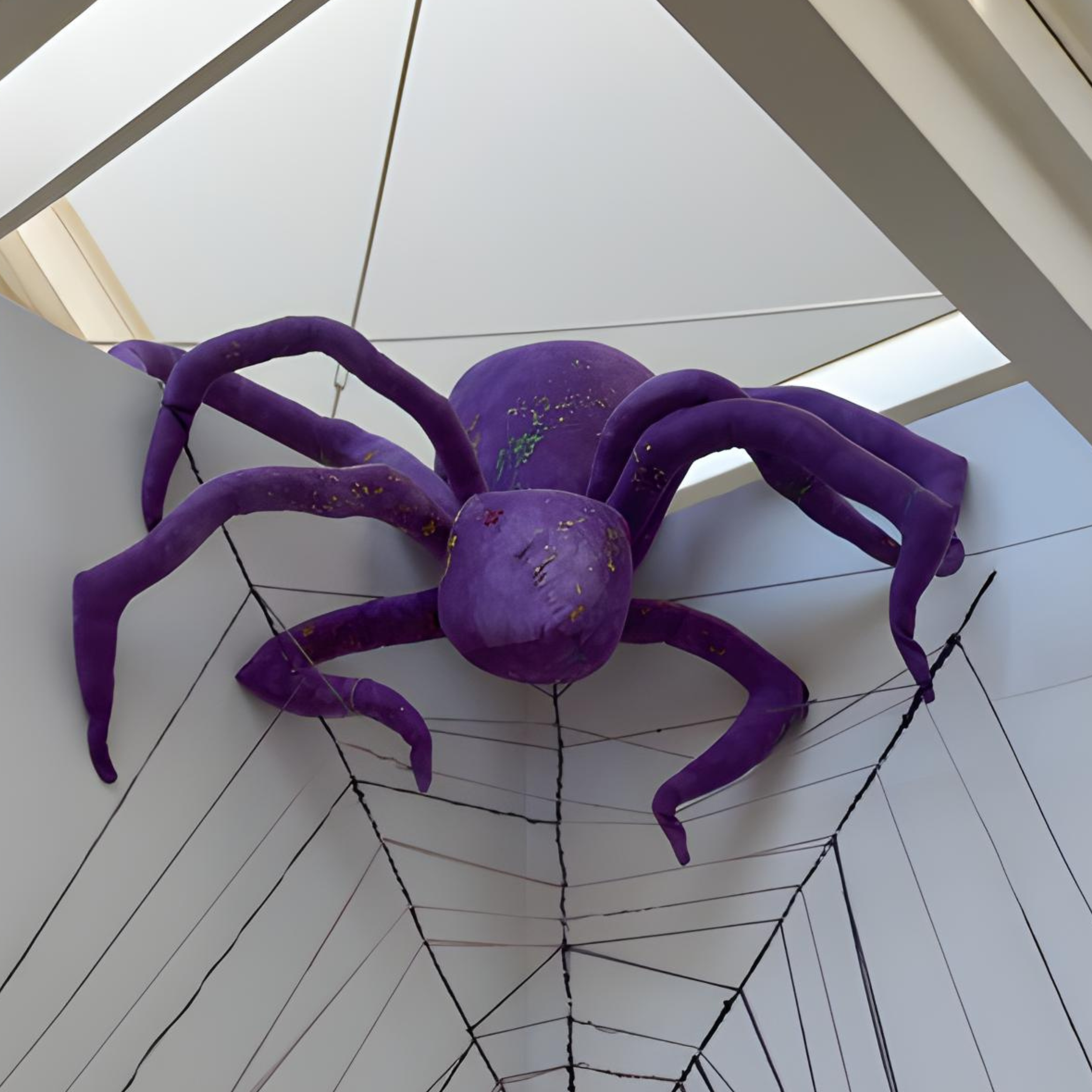
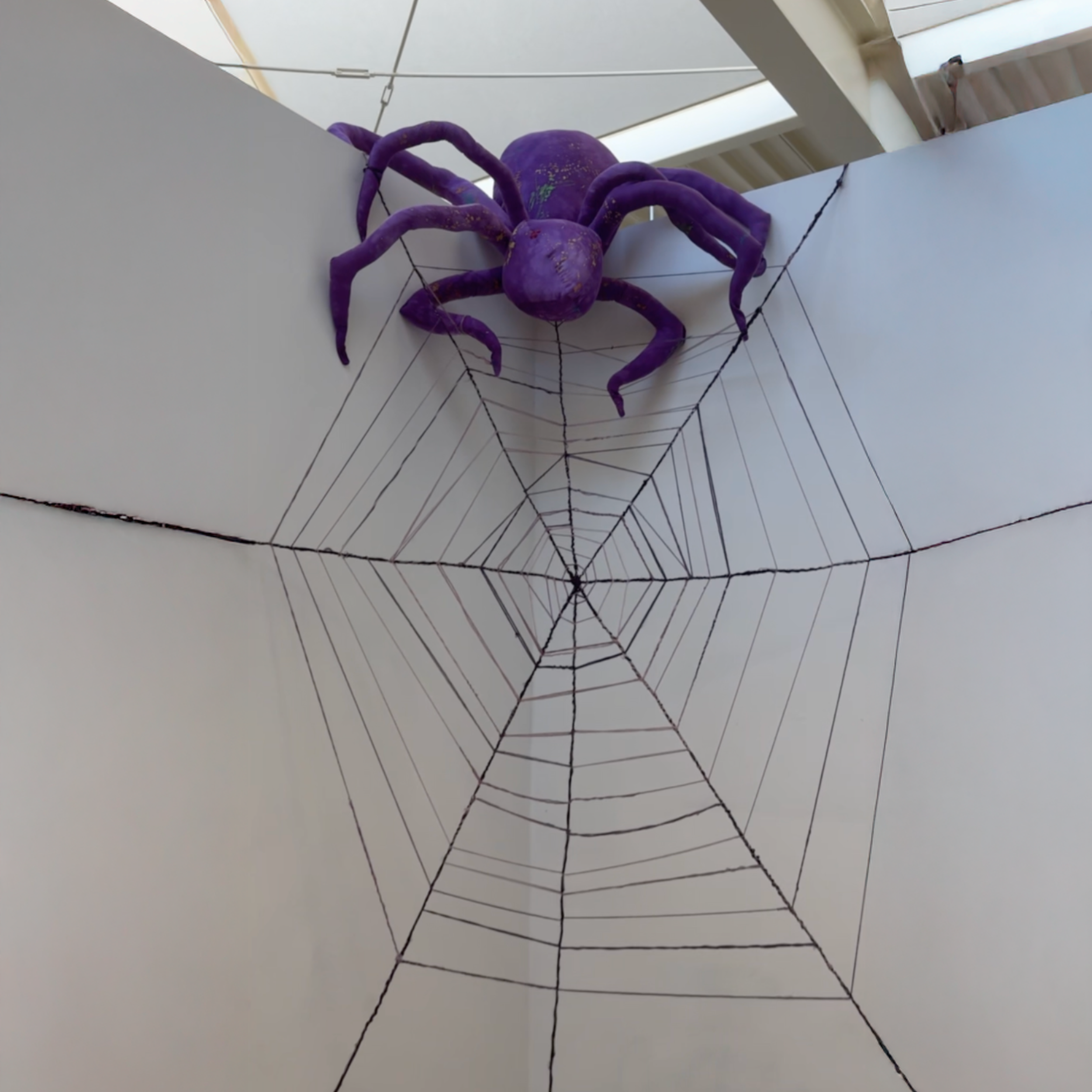
Inspired by the abstract work Purple Haze, this piece evolves the eye-painted strokes into a soft-sculptural installation. Translating the gestural marks and saturated purples of the original work into three dimensions, the piece manifests as a large-scale spider climbing the walls of the artist’s studio, blurring the boundaries between image, object, and environment.
The spider functions as both symbol and structure. Long associated with intelligence, patience, and quiet power, it embodies a form of creation that relies not on pursuit but on construction—an organism that builds a trap and waits. This duality of beauty and unease echoes throughout the work, where attraction and discomfort coexist. The sculpture also nods to sculptor Liz Craft, particularly her fiberglass black widow, reimagined here through softness, textile, and color rather than rigidity.
Material transformation is central to the piece. A reclaimed white bedsheet was dyed in deep violet tones, then screen-printed with layered excerpts from Purple Haze, extending the original artwork onto fabric. From this printed textile, the spider’s form was constructed; eight articulated legs, a rounded abdomen, and a face; supported internally by wire armatures that allow the sculpture to hold deliberate, expressive poses. The eyes are rendered using Ukrainian cross-stitch, introducing a slow, meditative handcraft into an otherwise bold, graphic surface. Red fabric integrated into lilac-dyed cloth references the iconic markings of the black widow, grounding the sculpture in both symbolism and lineage.
The installation is completed by a web of dense purple yarn stretched across the studio’s corner walls, transforming the space into a site of entanglement and tension. Purple Haze celebrates craft, innovation, and material experimentation, while exploring themes of adaptation, agency, and the quiet power of building one’s own systems of survival.
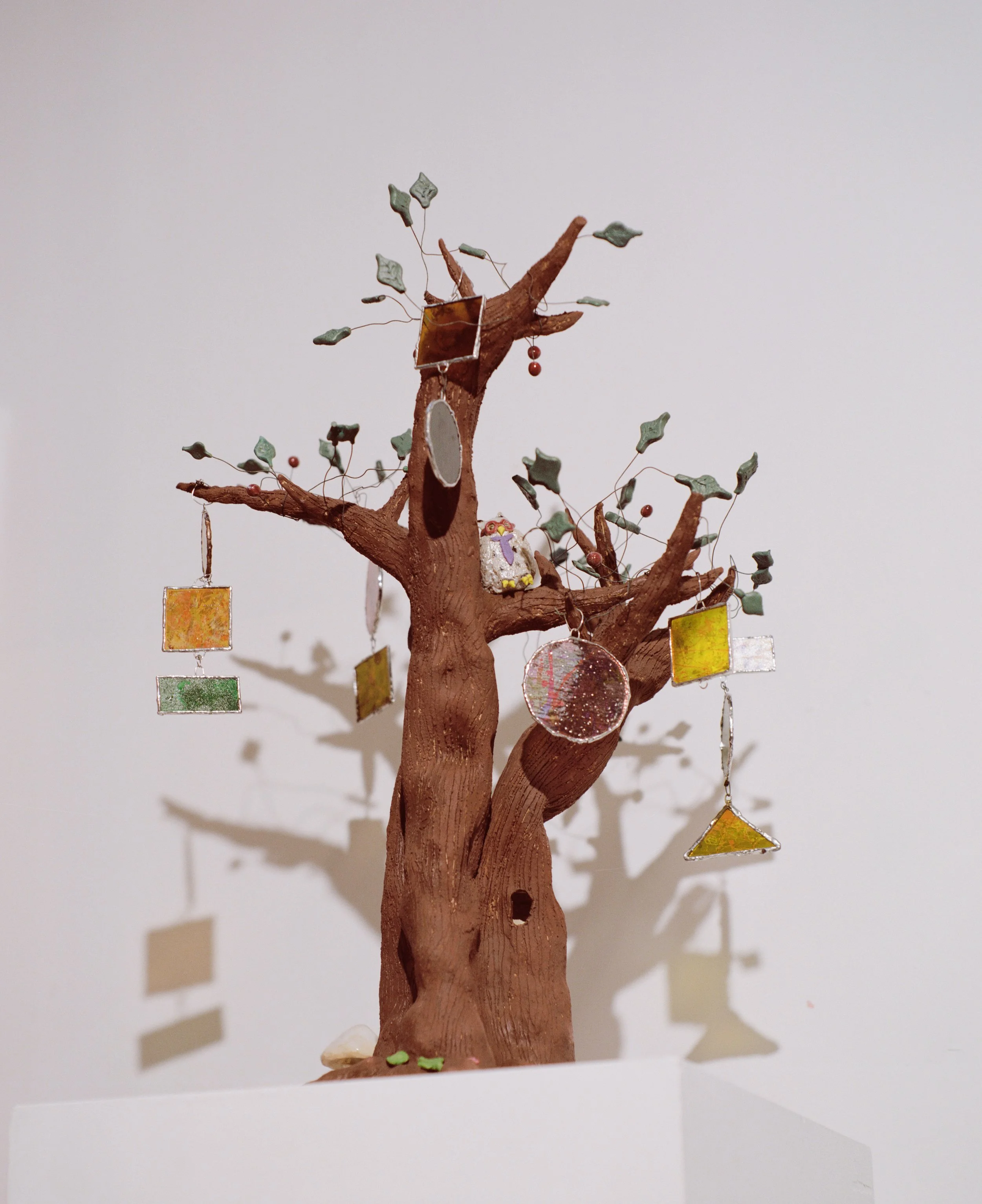
Tree of Abstraction
Sculpture (clay, hydroprint on stained glass)
At the center of this piece stands a hand-built clay tree sculpture adorned with suspended stained-glass talismans, each infused with Lilia’s signature abstract imagery. As light passes through the glass, the ornaments glow and refract, animating the surrounding space. Nestled among the branches, small clay figurines gather like quiet guardians—witnesses within a world that feels at once whimsical and reverent.
Lilia’s abstract paintings, originally created as two-dimensional digital works, are hydroprinted onto the stained-glass ornaments, giving the imagery a new dimensional presence. Through this process, her marks and colors flow across curved surfaces, producing shifts in opacity, depth, and texture. The paintings become atmospheric rather than fixed, activated by transparency and movement as light filters through the glass. Each talisman exists as both an extension of the original artwork and a singular object shaped by chance and material response.